
Flamenco shows in Barcelona
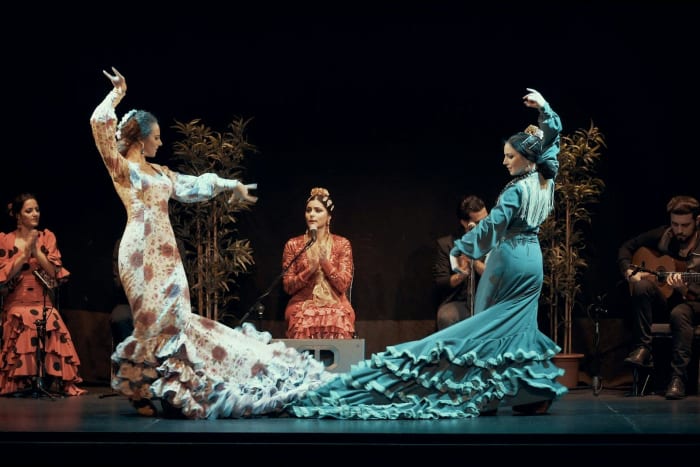
With Funbooker, find the best flamenco show in Barcelona. Tablaos in the Barri Gòtic, dinner shows or a concert at the Palau de la Música: feel the rhythm of the guitar and the zapateado. Best price guaranteed - Free cancellation


20,000 activities
to choose from
20,000 activities
to choose from


Free
cancellations
Free
cancellations


Rated 4.8/5
(+100k reviews)
Rated 4.8/5
(+100k reviews)


Same price
as buying direct
Same price
as buying direct
They've seen a flamenco show in Barcelona!
5/5
Our funlovers tell you about their evening
Frequently asked questions
What is flamenco?
Flamenco is an art form born in Andalusia, in southern Spain. It mainly combines singing (cante), dance (baile) and musical accompaniment (toque), especially on the guitar.
Where does flamenco come from?
Flamenco developed in Andalusia from a range of cultural influences. Its history is closely linked to the Gitano communities of Andalusia, as well as to the musical traditions found in the region over the centuries.
When did flamenco first appear?
The exact origins of flamenco are hard to date, as it was first passed down orally. The first documented forms close to today's flamenco mainly appear from the late 18th century onwards.
Why is flamenco associated with Andalusia?
Andalusia is considered the historical cradle of flamenco. Cities such as Seville, Cádiz, Jerez de la Frontera and Granada played an important role in its development and still have a strong flamenco tradition today.
What are the different styles of flamenco?
Flamenco includes many styles, called palos, each with its own rhythm and character. Among the best known are soleás, bulerías, alegrías, tangos and seguiriyas.
Which instruments are used?
The flamenco guitar takes centre stage, accompanied in particular by palmas, the famous rhythmic hand claps. Depending on the show, you may also hear the cajón and other percussion instruments.
Why do flamenco dancers stamp their feet?
The footwork, called zapateado, allows dancers to create rhythmic sequences that interact with the music. It is one of the most distinctive techniques of flamenco dance.
Is flamenco a UNESCO World Heritage?
Yes. Since 2010, flamenco has been inscribed on UNESCO's Representative List of the Intangible Cultural Heritage of Humanity, which recognises its cultural importance and its transmission between generations.
Can I give a flamenco show as a gift?
Yes. You can give it as a gift voucher or with a Funbooker gift card. The recipient then has 12 months to book the date of their choice.
Which payment methods are accepted?
On Funbooker, you can pay for your booking by bank card, PayPal, Funbooker credits or Illicado cards. All transactions are fully secure.
Summary
Summary
Our pick of the 8 best flamenco shows in Barcelona
No need to head all the way to Andalusia to feel the thrill of the zapateado. In a cellar in the Barri Gòtic, on Plaça Reial or beneath the mosaics of the Palau de la Música, Barcelona has built a flamenco scene that is as lively as it is varied. From intimate tablaos to grand concerts, eight evenings deserve a place in your diary.
City Hall Barcelona
An intimate venue where the dancers take the audience on a journey: that's what one spectator remembered about this historic theatre at the top of Rambla de Catalunya.
Bulerías and soleás follow one another, driven by the flamenco guitar and pulsating percussion. According to audience members, a complimentary drink comes with the show.
Tablao de Carmen
Carmen Amaya danced as a child in the neighbouring courtyard, and this tablao set up in her honour in the Andalusian quarter of the Poble Espanyol, on Montjuïc hill.
Four dancers, two guitarists and two singers make up the company of this classic tablao. Your booking includes entry to the Poble Espanyol, to explore before the show.
Los Tarantos
Castanets and ruffled skirts aren't required to enjoy this historic tablao on Plaça Reial, where the new generation of Catalan flamenco takes the stage.
No dinner and no complicated packages, just the show, which makes it a great option after a meal in the Barri Gòtic, a stone's throw from La Rambla.
El Duende
Cocktails and flamenco share this intimate venue on La Rambla, heir to the Tablao Cordobés, a house founded by a family of artists.
The line-up changes every night and blends traditional and contemporary flamenco. The Zona Frontal guarantees a front-row seat with a signature cocktail.
Las Brujas Flamenco
An old cellar in the heart of the Gothic Quarter sets the scene for this show, in an Andalusian setting where seasoned artists and emerging talents cross paths.
There's also an exhibition tracing the evolution of contemporary flamenco, so it's worth arriving a little early. An evening that appeals to newcomers and aficionados alike.
Teatro Flamenco Barcelona
Inspiración, the house show, brings together powerful singing, dance and guitar in this theatre dedicated to flamenco in the El Born neighbourhood.
The seats close to the stage let you experience every step up close. With its narrow streets and tapas bars, the neighbourhood is perfect for a stroll before or after.
Tablao La Pacheca
Dinner and a show in the same place, with no rushing between two addresses: this tablao on La Rambla combines both in a flamenco dinner package.
The meal celebrates Spanish cuisine before the artists take the stage. A popular choice for a birthday or a romantic evening.
Palau de la Música Catalana
A change of tone with this concert-show at the Palau de la Música Catalana, where a guitar trio is joined by a flamenco dancer.
The programme blends classical music and flamenco, from Manuel de Falla to Paco de Lucía. The Art Nouveau concert hall, a UNESCO World Heritage Site, is worth the visit on its own.



Most popular activities
Top destinations in Spain
Top destinations in Spain