Visits and tours in Spain
With Funbooker, discover the most beautiful places to visit in Spain. Museums, palaces, monuments and food tours are all available to book. Best price guaranteed - Free cancellation







20,000 activities
to choose from
20,000 activities
to choose from


Free
cancellations
Free
cancellations


Rated 4.8/5
(+100k reviews)
Rated 4.8/5
(+100k reviews)


Same price
as buying direct
Same price
as buying direct
They visited Spain with Funbooker
5/5
Our travellers tell you about their visit

Summary
Summary
Top 15 must-see destinations to visit in Spain
Fifteen destinations, fifteen different Spains. Between Andalusian palaces, Costa Brava coves, Canary Island volcanoes and northern peaks, the hardest part is choosing where to start (we'll help you out a little).
Barcelona
The capital of Catalonia owes much of its style to the architect Antoni Gaudí. His masterpiece, the Sagrada Família basilica, has been under construction since 1882 (and work is still going on).
Up on the hill, Park Güell hides mosaic-covered benches, and Casa Batlló, a building with a wavy façade, intrigues passers-by. Further down, the Gothic Quarter, the medieval heart of the city, leads down to the beaches of Barceloneta.
Madrid
Madrid is first and foremost a capital of museums. The Prado displays the great masters of Spanish painting, led by Velázquez and Goya, and forms the Golden Triangle of Art with the Reina Sofía and the Thyssen.
The Royal Palace, official residence of the Spanish royal family, opens its halls to visitors. Then take a breather in Retiro Park, before a drink on Plaza Mayor or a show on Gran Vía, the avenue of theatres.
Seville
The capital of Andalusia is home to two UNESCO-listed monuments. The Alcázar, a royal palace with Mudéjar halls and lush gardens, faces the cathedral, one of the largest Gothic cathedrals in the world.
Its bell tower, the Giralda, is a former minaret. All around, the Santa Cruz quarter, the old Jewish district, unfolds white alleyways and flower-filled patios all the way to Plaza de España, built for the 1929 Ibero-American Exposition.
Granada and the Alhambra
At the foot of the Sierra Nevada, Granada was the last Muslim capital in Spain, until 1492. Its Alhambra, a citadel perched on a hill, houses the Nasrid palaces, famous for their carved stucco and water-filled courtyards.
Right next door, the Generalife gardens were the sultans' summer residence. Book weeks in advance, then head up to the Mirador de San Nicolás in the old Albaicín quarter to see the Alhambra at sunset.
Tenerife and Mount Teide
The largest of the Canary Islands, off the coast of Africa, is dominated by Mount Teide, a 3,715-metre volcano and Spain's highest point. Its UNESCO-listed national park reveals striking volcanic landscapes.
To the north-east, the Anaga massif hides a laurel forest and isolated villages. To the west, the hamlet of Masca clings to the cliffs of Teno. The beaches, often of black volcanic sand, round off the stay.
Mallorca
The largest of the Balearic Islands is about much more than its beaches. In Palma, the capital, the Gothic cathedral overlooks the sea, with an interior partly redesigned by Gaudí.
In the north, the Serra de Tramuntana, a UNESCO-listed mountain range, is home to stone villages such as Valldemossa, where Chopin and George Sand spent a winter. As for the turquoise coves, you'll need to get there early in the morning in summer.
Cordoba
The former capital of the Umayyad caliphate of al-Andalus, Cordoba boasts an extraordinary monument. Inside the Mosque-Cathedral, hundreds of columns support red-and-white striped arches, with a Renaissance cathedral built right in the middle.
Around it, the UNESCO-listed historic centre reveals the Judería, the old Jewish quarter, then the Roman bridge over the Guadalquivir. In May, residents open their flower-filled patios to the public during a very popular festival.
Costa Brava
Between the French border and Barcelona, the Costa Brava is Catalonia's rocky coastline. Its turquoise coves are linked by the Camí de Ronda, a coastal path winding between pine trees and rocks.
Cadaqués, a fishing village of white houses, won over Dalí, who lived nearby in Portlligat. Further south, Begur and Tossa de Mar, surrounded by medieval walls, are also well worth a visit.
Valencia
Spain's third-largest city, on the Mediterranean coast, Valencia combines a Gothic old town with futuristic architecture. The City of Arts and Sciences, largely designed by Calatrava, brings together museums, an aquarium and an opera house.
The two worlds are linked by the Turia Gardens, a park laid out in the former riverbed. At the end lies Malvarrosa beach, and to the south, the rice fields of the Albufera, birthplace of paella.
Malaga
The gateway to the Costa del Sol, in Andalusia, Malaga is also Picasso's birthplace. The museum dedicated to him occupies a 16th-century palace in the heart of the historic centre.
Above the port, the Alcazaba, an 11th-century Moorish fortress-palace, is linked by a wall to Gibralfaro Castle. Once at the top, the view takes in the whole bay.
Toledo
Around 70 kilometres south of Madrid, Toledo is a former capital of the kingdom. It's known as the city of three cultures, as Christians, Jews and Muslims lived side by side here for centuries.
Its UNESCO-listed medieval old town gathers a Gothic cathedral, synagogues and a former mosque on a single hill. Easy to visit in a day, our excursion from Madrid also includes Don Quixote's windmills.
Picos de Europa
For mountain Spain, head north. Straddling Asturias, Cantabria and Castile and León, the Picos de Europa form the first national park created in the country.
The Cares Route, a path carved into the cliff, follows spectacular gorges for around twelve kilometres. The glacial lakes of Covadonga and the Fuente Dé cable car offer more accessible walks.
San Sebastián
An elegant seaside resort in the Basque Country, some twenty kilometres from France, San Sebastián stretches around La Concha bay and its crescent-shaped beach. The Monte Igueldo funicular offers a panoramic view.
But let's be honest, people mainly come here to eat. In the old town, bars line up their pintxos, the Basque tapas, and the city has a remarkable number of Michelin-starred restaurants.
Santiago de Compostela
The capital of Galicia, Santiago de Compostela is the end point of the Camino de Santiago, the great Christian pilgrimage. Walkers finish their journey on Plaza del Obradoiro, facing the cathedral, in the heart of a UNESCO-listed historic centre.
Inside, the Portico of Glory, a masterpiece of Romanesque sculpture, impresses even the least spiritual. During some masses, the botafumeiro, a giant censer, swings above the crowd.
Lanzarote
At the north-eastern tip of the Canaries, parts of Lanzarote look like the Moon. In the 18th century, eruptions covered part of the island, forming Timanfaya National Park, where heat still rises from beneath the ground.
Local artist César Manrique shaped the island by blending his works into the volcanic landscape, as at the Jameos del Agua. In La Geria, vines grow in hollows of black ash, a striking sight.
Our tips for visiting Spain
The Alhambra, the Alcázar, the Sagrada Família and the Prado sell out quickly in high season. Booking your tickets in advance saves you from queuing under the midday sun.
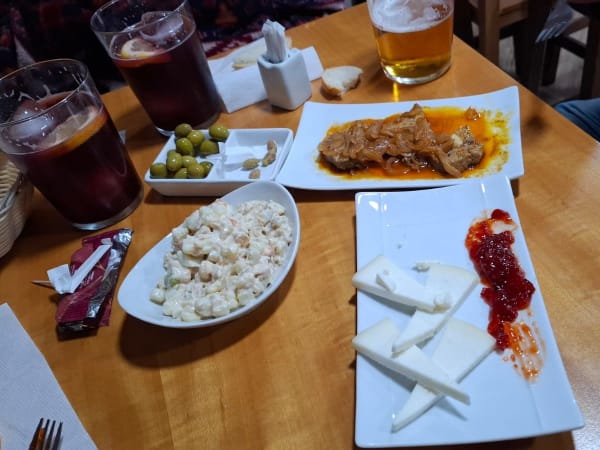
Also adapt to the local rhythm, with lunch around 2 PM and a late dinner. A food tour on your first evening helps you get into the swing of things and spot the best places.